Most wellness apps hand you a playlist and ask you to relax on their terms.
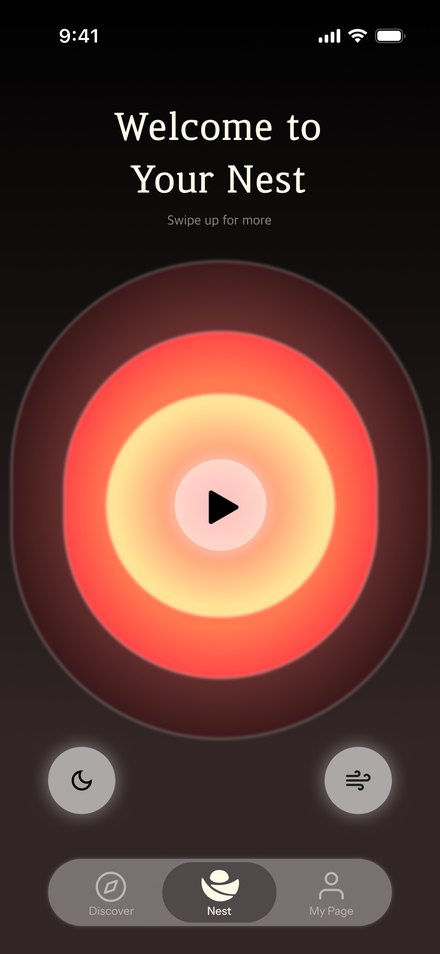
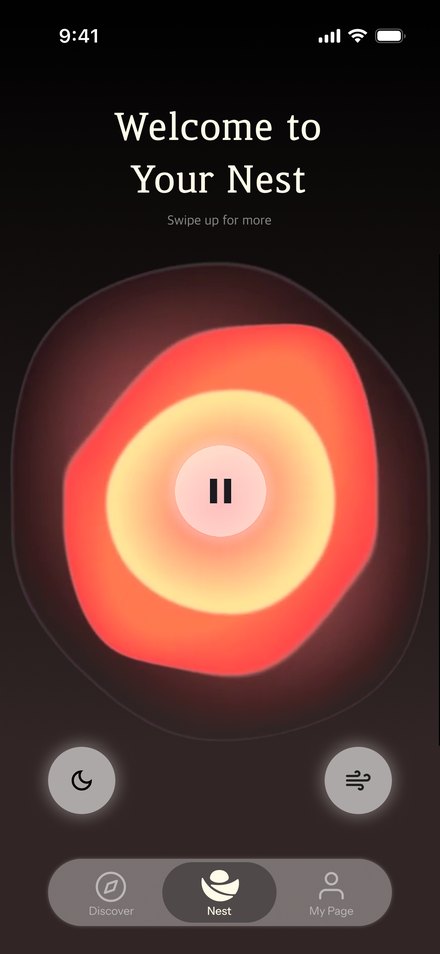
NiDO lets you stack three layers of sound into a soundscape that's yours, then
breathe inside it with your phone resting on your belly.
Solo UX/UI designerDesigned in Figma5 weeksSchool project, 2025
Sound you receive, not sound you make
Most sound and wellness apps are built around consumption. You open the app, pick from a
curated list, and listen to what someone else decided was good for you. The experience is
passive by design.
But sound is personal. The combination that helps one person sleep is completely different
from what works for another, and it changes day to day. NiDO was designed around a different
premise: what if your audio sanctuary was something you built, not something you were given?
The challenge was making an app that felt expressive and playful rather than clinical, while
still serving real needs like sleep, focus, and stress relief.
Understanding the space
Stress and poor sleep have become defining struggles for Gen Z and Millennials. Studies show
1 in 4 Gen Z individuals report chronic sleep difficulties, with stress as the primary driver.
Research published in PLOS One found that ASMR reliably lowers heart rate and increases feelings
of calm, validating sound as a genuine therapeutic tool.
But despite the science, the apps available today haven't caught up with how people actually
want to use sound.
Calm
Guided meditations and sleep stories.
Prescriptive. You consume, you don't create.
Headspace
Structured programs and breathing exercises.
Feels like homework. No ambient customization.
Brain.fm
AI-generated focus and relaxation music.
No user agency over what you hear.
Endel
Adaptive AI soundscapes.
Personalized but passive. Nothing is layered by you.
NiDO ✦
You build your own soundscape, layer by layer.
Sound is something you play with, not just receive.
Every app treats sound as content to deliver. None treat it as something to play with.
Who it's for
Two users who arrive from opposite directions — one wants creative depth, the other wants a ritual that doesn't feel like a chore.
Naisha, 28
Yoga instructor
Already uses ASMR and meditation daily. Finds existing apps limiting — she knows the
soundscape she wants, she just can't build it anywhere.
Layer sounds to match the mood of her practice
Discover new textures she hasn't heard before
Use the app as a creative ritual, not a utility
Daniel, 22
College student
Stressed, sleep-deprived, and new to meditation apps. Open to trying something as long as
it doesn't feel like one more thing he's failing to keep up with.
Sleep better on a schedule that keeps shifting
Avoid anything that feels like self-improvement homework
Build a small ritual he can actually stick to
Four rules the design had to follow
Play before prescription
The app should feel like something you want to explore, not a routine you're supposed to follow.
Layered, not linear
Sound isn't one-dimensional. NiDO lets users build in depth instead of just pressing play.
Body and sound together
Haptic breathing roots the experience in the physical body. True calm is felt, not just heard.
Structured when you need it, open when you don't
Pathways give Daniel a guided entry point. The Nest gives Naisha creative freedom. Both users are served by the same app.
Four features, one idea
Everything in NiDO comes back to the same premise: you are the one building the sanctuary.
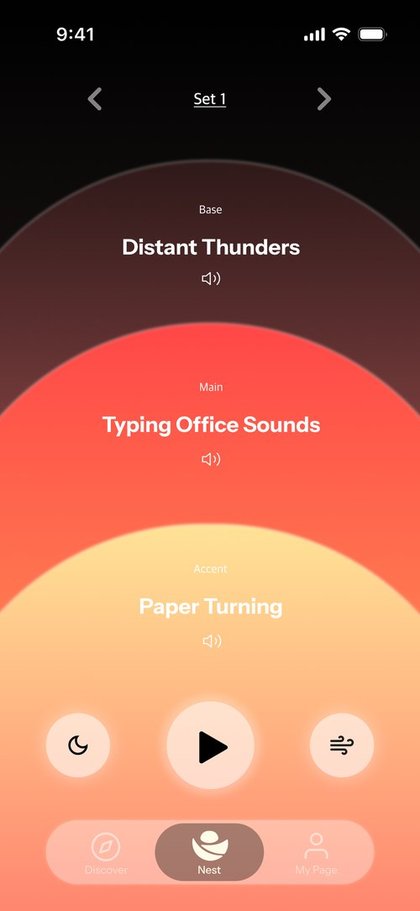
Sound stacking
The Nest
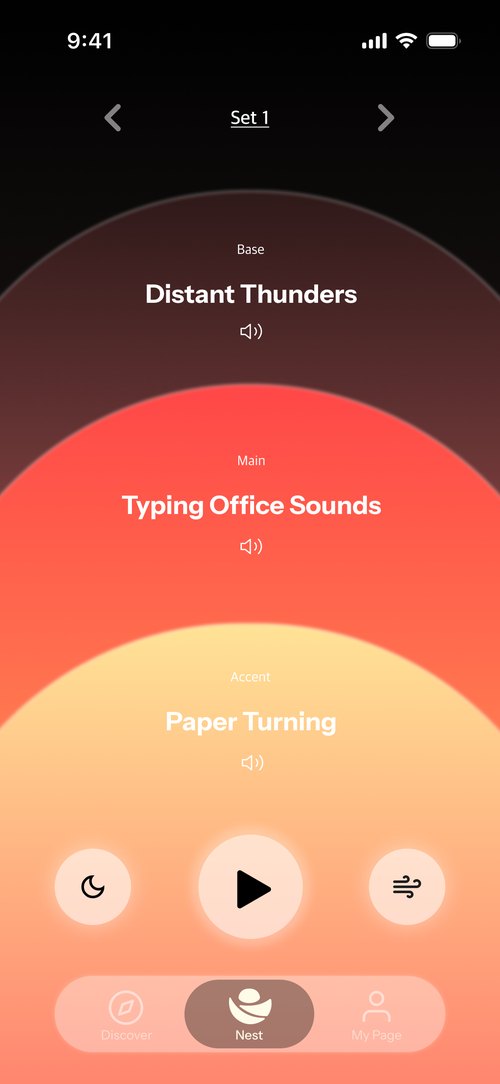
Stack up to three layers of sound and control each layer's volume independently with a
sliding interface. The interaction is the point — mixing your soundscape is tactile,
playful, and personal in a way that choosing from a list never is.
Daily exploration
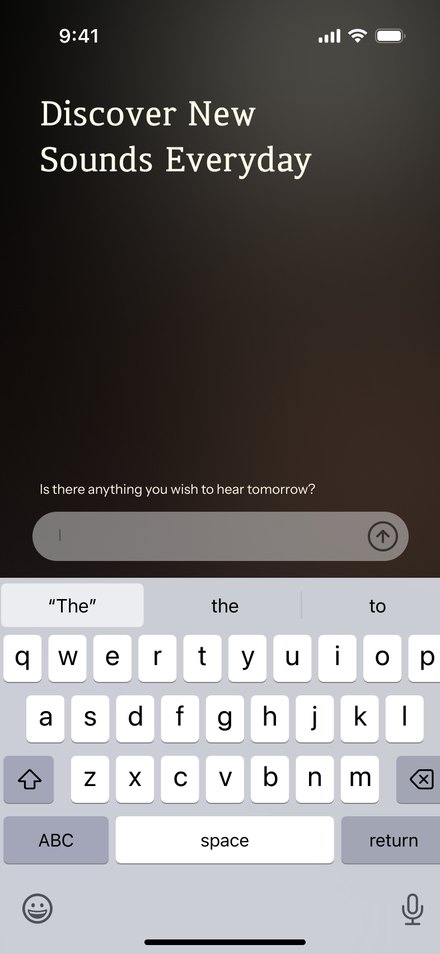
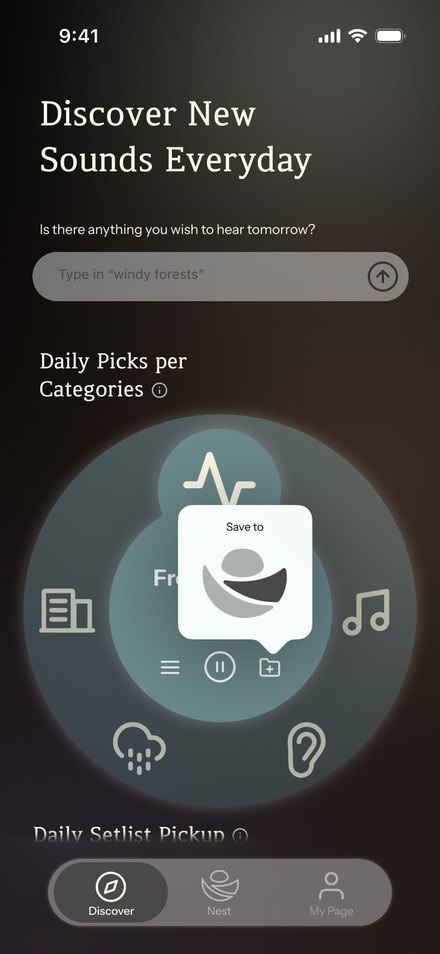
Discovery
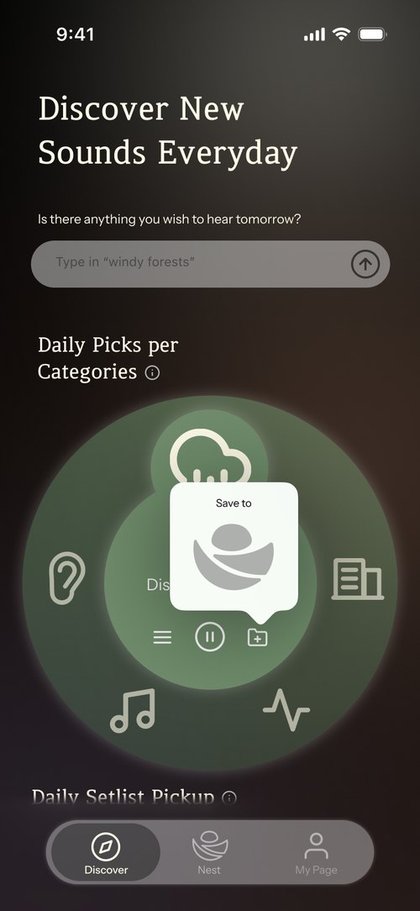
Browse new sounds daily, organized by category — nature, urban, ambient, frequencies,
music, and triggers — or send a request for a specific sound you want to hear tomorrow.
Users can save tracks to each layer of their Nest and find them later in their library.
The library stays fresh, and users have a hand in what gets added to it.
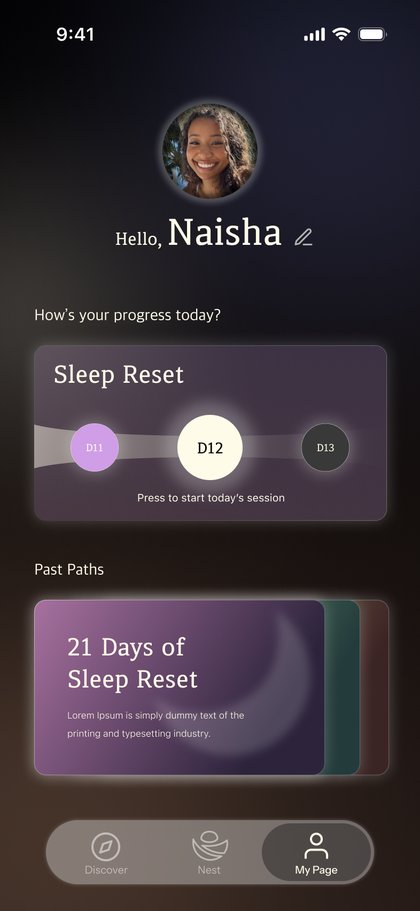
Guided sessions
Pathways
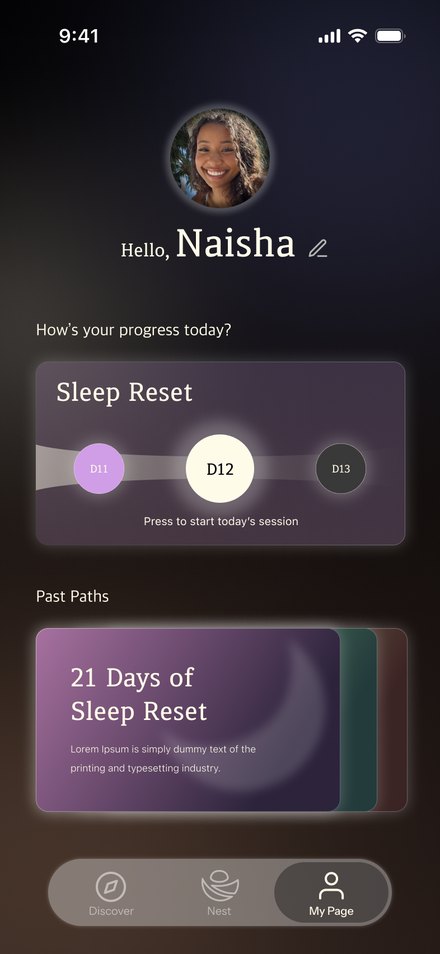
Guided sessions that run over days or weeks — Sleep Reset, Daily Lightup — building a ritual
around a specific moment in your day. Structured enough for a beginner, meaningful enough
for someone who's been at it for months.
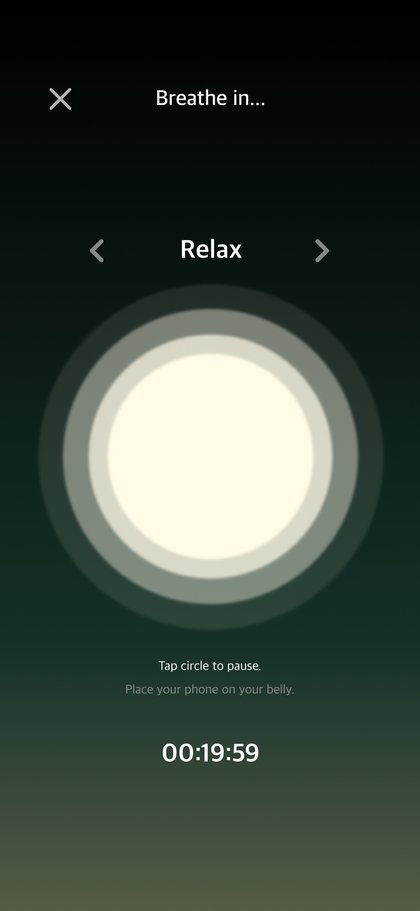
Somatic anchor
Haptic Breathing
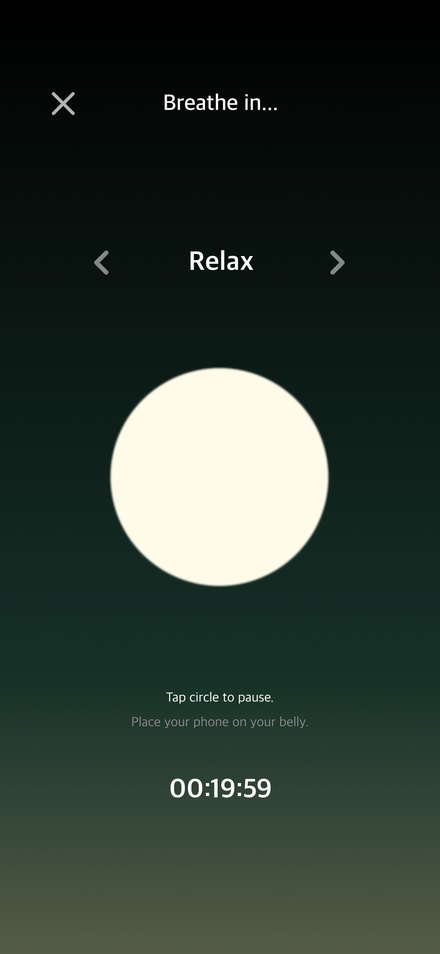
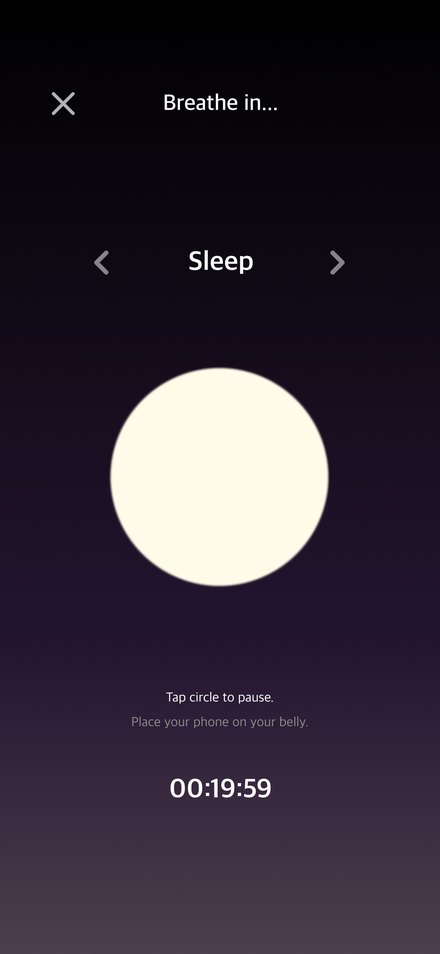
Choose a breathing pattern and rest your phone on your belly. The haptics pulse with each
inhale and exhale, giving you a physical anchor to follow while the sounds play. It's the
one feature in NiDO you feel before you hear.
4 seconds in, 6 seconds out — the pattern used in Sleep Reset.
Dusk, not a doctor's office
Deep charcoal grounds the interface; warm amber and orange gradients carry the feeling of
last light. Soft purple marks the moments that belong to the body rather than the ear.
Charcoal
#0F0F0F
Amber gradient
#E8855A → #C9552F
Soft purple
#9B7FD4
Warm cream
#F6F1E8
Welcome to NiDO
A modern serif carries the app's name and section titles; a clean sans handles everything
that needs to be read quickly. The contrast keeps the warmth of the color system from
tipping into softness.
Wireframes to final screens
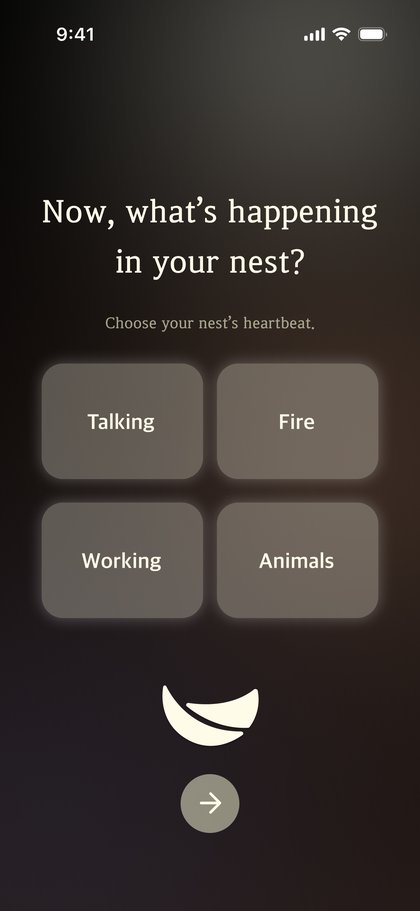
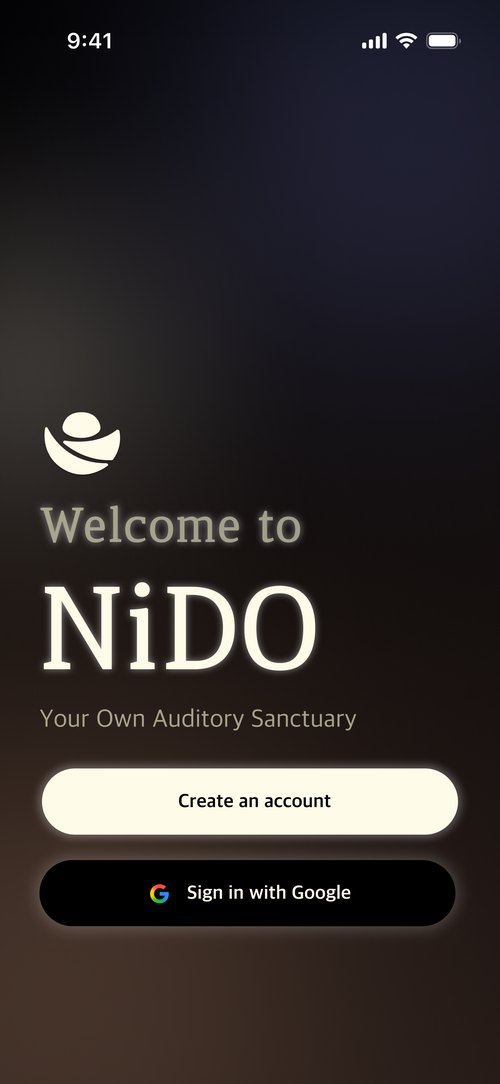
Five screens carry the product: where you start, where you build, where you breathe, where you commit, and where you find what's next.
Onboarding
The Nest
Haptic Breathing
Pathways
Discovery
What I'd do next
NiDO started from a simple question: can a wellness app be genuinely fun? The Nest was the seed
of the whole project — sliding through layers of sound the way you'd mix a track felt playful
and satisfying in a way that opening a playlist never does. Everything else grew outward from
that one interaction.
Designing solo over five weeks meant the concept moved fast, but it also means the riskiest
ideas haven't met a real user yet.
Test the haptics with real users
Haptic breathing is the most novel interaction in the app and the one that would benefit
most from usability testing — specifically the timing, the vibration intensity, and how the
feature explains itself the first time someone opens it.
Make Discovery social
The Nest produces something personal, and personal things get shared. Letting users publish
a mix to the Discovery tab would turn a solo ritual into a small library other people build
on.
 Google Youth Advisor

 Calm
 Headspace
 Brain.fm
 Endel